Financial Reporting: Standards and Capital Market
Financial reporting is much more than just regulatory compliance. It is the universal language your business speaks to the global market. In this main section, I have combined the strict methodology of standards (IFRS) with the art of strategically presenting numbers to investors. Here, you will find the fundamental knowledge base to build a transparent, efficient, and investment-attractive reporting architecture for your company.
Explore by Category
Strategic Reporting: Capital Markets and ESG
Reporting as a tool for managing business market value. Explore strategies for going public, ESG implementation, and balance sheet analysis. Turn your numbers into investor trust.
IFRS Insights & Practical Application
International Financial Reporting Standards are more than just a compliance requirement—they are the global language of business performance. This section moves beyond the dry text of regulations to offer a CFO’s perspective on practical application.
Recommended Reading
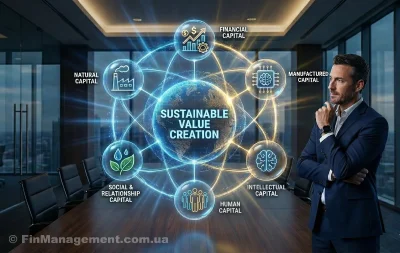
Integrated Reporting: From Voluntary Initiative to the New Standard of Corporate Transparency

The Importance of the Balance Sheet (Statement of Financial Position) for Business Management
The Conceptual Framework for Financial Reporting: An Analytical Overview
IAS 1: Presentation of Financial Statements – A Comprehensive Overview
IFRS 1: First-time Adoption and Transformation
IFRS for SMEs Standard – An Overview
2. Financial Statements under IFRS for SMEs: Structure, Consolidation, and Unique Simplifications (Sections 3–10, 31–33)
3. Accounting for Non-financial Assets under IFRS for SMEs (Sections 13–20, 27, 34)
4. Financial Instruments and Equity under IFRS for SMEs (Sections 11, 12, 22)
5. Revenue, Taxes & Liabilities in IFRS for SMEs (Sections 21, 23-26, 28-30)
Explore Related Topics

The “Reverse” Route to Nasdaq: An Accounting Paradox Opening Doors for Ukrainian Business