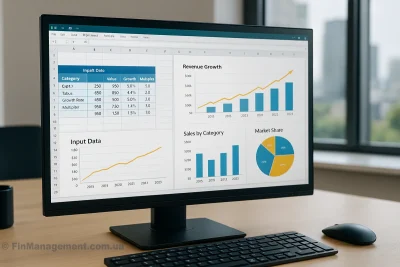
Financial Strategy & Business Performance
Financial strategy is the ability to see the entire business chessboard, anticipate threats, and design an architecture of resilience. In this section, I share practical experience in building effective KPI systems, managing corporate risks, and optimizing business processes. These materials will help you step beyond operational spreadsheets, take a global view of the company, and become a true strategic partner to business owners.
Recommended Reading

Strategic Resilience Architecture: How to Build a Risk Management System for Small and Medium-sized Enterprises (SMEs)
Risk management is not about expensive software; it's about culture and discipline. In this guide, we deconstruct how Ukrainian SMEs can build a "Strategic Resilience Architecture" using simple tools like Risk Matrices, KRIs, and Nassim Taleb’s philosophy of Antifragility. Transform your business from fragile to robust.

Toxic KPIs: How Misguided Motivation Kills Business
Green dashboards don't mean a healthy business. Learn why focusing on EBITDA, purchase price, or machine utilization might be driving your company off a cliff, and discover the 3 golden rules of healthy incentives.
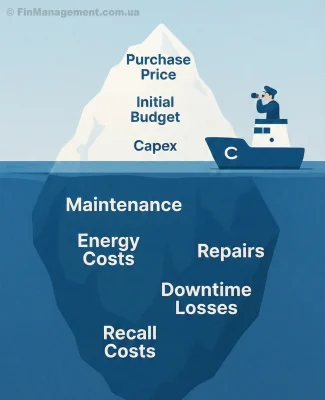
The Iceberg of Your Business: Where the Biggest Financial Risks Really Hide
Are you managing incurred costs or committed costs? A CFO explains why 80% of expenses are locked in at the design phase. Lessons from Ford, Boeing, and Dell on TCO.

Turn Operational Chaos into Cash: How TOC, Lean, and Six Sigma Work Together
Stop localized cost-cutting. Learn how to combine TOC, Lean, and Six Sigma (the TLS Model) to turn operational chaos into real profit and maximize Throughput.
View All in Strategy & Performance

Beyond Budgets and Deadlines: A CFO’s Perspective on True Project Success
Beyond Budget and Deadlines: A CFO’s Guide to True Project Success
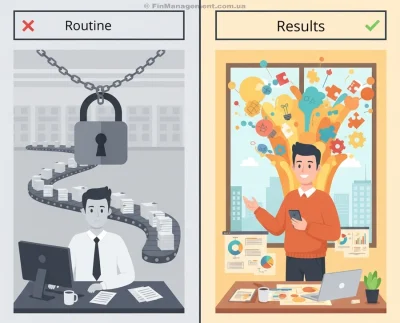
Your Job Is More Than Just a To-Do List. How to Turn Routine into Results
Feel like a cog in the machine? Learn how to apply Job Enrichment to turn routine tasks into results. Practical examples for Accountants, Managers, and Sales.
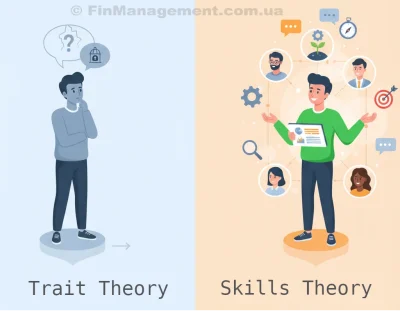
Leadership Is a Skill, Not a Character Trait
Stop believing the myth of the "born leader." Modern management proves leadership is a set of tools anyone can master. Whether you are an analytical introvert or an energetic extrovert, learn how to use your natural strengths to lead effectively.
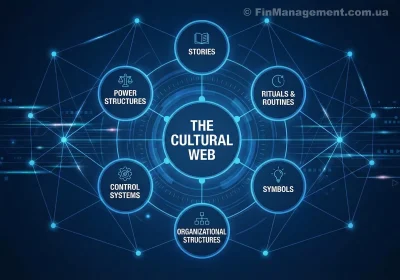
Corporate Culture as a Strategically Valuable Asset
Culture is not just HR fluff; it’s a measurable asset. A CFO explains how to use the "Cultural Web" model to drive financial performance and manage risk.
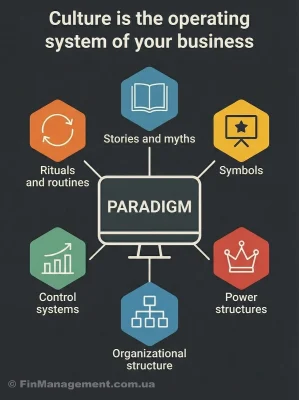
Corporate Culture Is the Operating System of Your Business
Is your strategy failing? Check your company's "Operating System." Use the Johnson & Scholes Cultural Web model to diagnose the 6 elements of your culture.
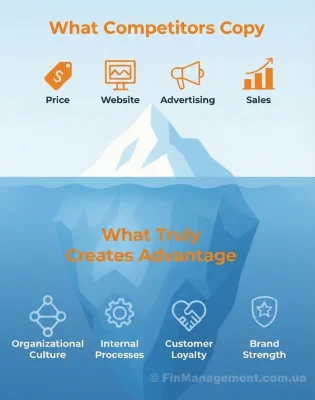
The Imitation Trap: A CFO’s Perspective on Why Your Key Asset Is a Non-Imitable Business System
Copying competitors destroys value. A CFO explains why Sustainable Competitive Advantage comes from non-imitable assets (VRIO Analysis) and unique culture.

The Cost of Dishonesty: How Bad Decisions Destroy Business
Ethics is a measurable financial metric. Analyze real-world cases (Danske Bank, Boeing, PrivatBank) proving that fraud and negligence lead to billion-dollar losses and bankruptcy.

Management Style: How Your Expectations Program Your Team’s DNA
Why is your team passive? It might be your expectations. Discover the impact of Douglas McGregor's Theory X vs Theory Y and how to avoid the "self-fulfilling prophecy" trap.

Why Are We Always Late? The Art of Seeing Hidden Delays: From “Touch Time” to “Waiting Time”
True productivity lies not in the speed of your employees, but in the absence of stops between tasks. Discover how analyzing Touch Time versus Waiting Time uncovers hidden operational losses. Implement these flow management rules to radically accelerate your company's output.
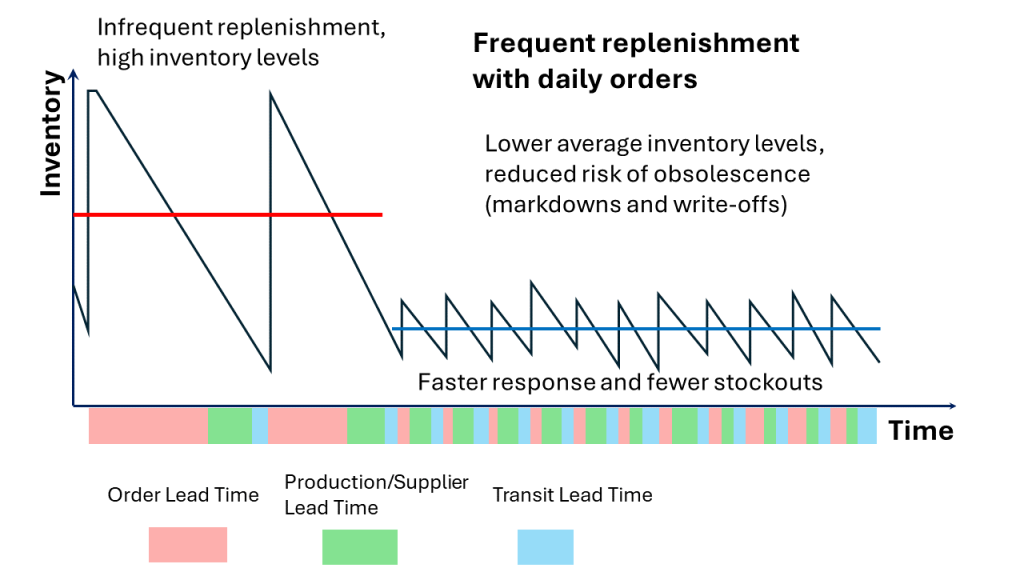
Supply Chain Transformation: Transitioning from Forecasting to the TOC Replenishment Model
Traditional inventory forecasting mathematically guarantees capital degradation through chronic stockouts and illiquid inventory. Learn how implementing the Theory of Constraints (TOC) replenishment model frees up working capital and radically increases your ROI.

Management Attention as a Strategic Constraint and Levers for Expanding Organizational Bandwidth
The primary barrier to business scaling is not a lack of capital, but the limited bandwidth of management attention. Discover how strict focusing and wiping out "multi-thinking" can overcome strategic paralysis. Unlock your organization's true potential without merely adding headcount.