Many still view corporate culture as something “soft” and secondary. In reality, however, it is a powerful tool that determines whether your strategy will succeed.
Culture is your company’s operating system (OS). It runs in the background and either supports your goals or rejects them.
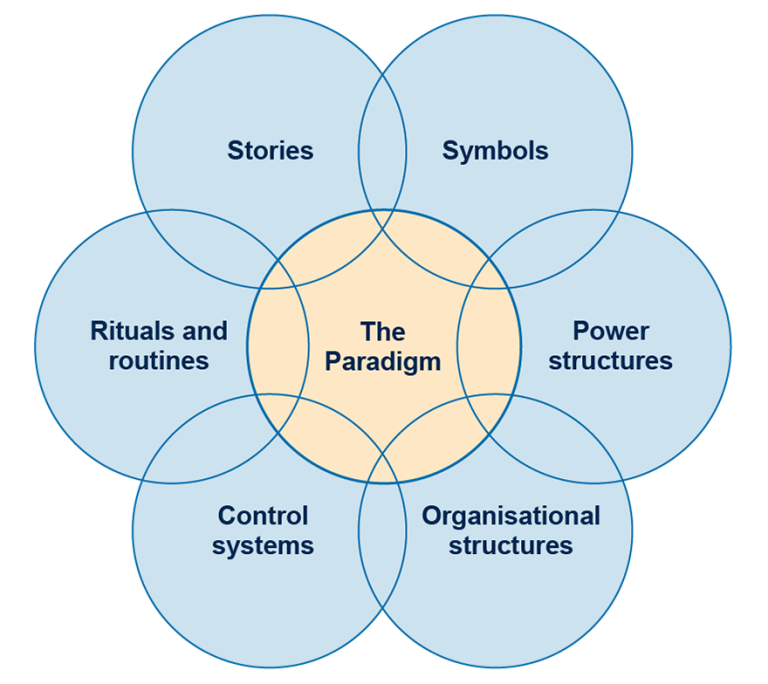
To understand how your “OS” works and where the “bugs” are, there is a classic model: The Cultural Web by Johnson and Scholes. It breaks down the abstract concept of culture into six specific elements that can (and must) be analyzed:
- Rituals and Routines. What daily actions and habits actually define your work? (“The way things are done around here”).
- Stories and Myths. What narratives about heroes, successes, and failures are constantly echoed in the corridors? These are what shape identity.
- Symbols. What does your office space, dress code, or internal jargon actually symbolize? This is the visual representation of what is important.
- Power Structures. Who holds real influence in the company, regardless of their official position? Where are the true centers of decision-making?
- Organizational Structures. How flexible or hierarchical is your company? The formal structure shows which roles and relationships are prioritized.
- Control Systems. What is actually measured, monitored, and rewarded?
These specific elements reveal your true priorities, not just the declared ones.
It is this “web” that filters ideas and determines which of them will survive and which will be rejected at the very inception. Therefore, to change your strategy, publishing a new mission statement is not enough. You need to consciously analyze and reconfigure these specific elements of culture.
This is the only way to transform declarations into real action.
Want to conduct a full diagnosis of your company?
This list is just the tip of the iceberg. If you want to dive deeper into the details, get a diagnostic checklist for each element, and see how culture directly impacts financial performance (ROI), read my detailed analysis:
👉 Read the article: Corporate Culture as a Strategically Valuable Asset